Say it.
I talk about who gets AI: the small business, the family and the person with a decade of know-how, not just the company with an AI team. From over a decade in hospitality operations and three companies. Remote.
Have me on your show Bios, headshot and questions manav@mpthaker.xyz
What I’ll bring to your show.
The caller is an AI now. What does the small business on the other end do?
Assistants are starting to phone businesses to book, cancel and ask. Big companies will have a plan for that call. I talk about the inn and the cafe that answer it, from over a decade in hospitality operations and from building an assistant that makes those calls.
I run a show with a team that doesn’t exist.
In 2019 the cheaper quote to film one episode of a show I wanted to start was $1,400. I never made it. Now a team of scheduled AI roles researches, drafts and checks my shows. I run it as one person and approve what ships. Who gets to make a show now, and what still needs a person.
Proof:See the org chart How I set it up MP in the PM The Operator Economy
Write it down first: your experience is the real input.
AI didn’t make experience worthless. It made looking busy cheap. What someone has learned on the job is the part a model can’t guess, and it only helps once it’s written down. The first useful thing I made with AI was a list, not an app.
Proof:Grapevines The first thing I made with AI wasn’t an app
AI at the kitchen table: what families actually need from it.
Most AI is sold to companies. I build for my own family: storybooks made around one child, a shared family chat that keeps the calendar and the grocery list, and a dashboard that says what changed this week and what to do about it. What helps at home, and where a parent stays in the loop.
For hosts.
Manav (MP) Thaker · manav@mpthaker.xyz · mpthaker.xyz/speaking · Remote podcasts, livestreams, panels and workshops.
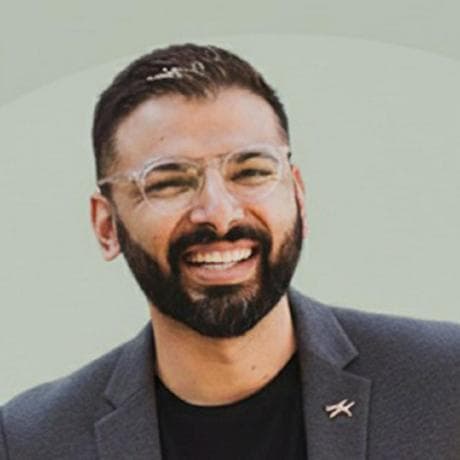
Bio, 25 words
Manav Thaker spent over a decade in hospitality operations and built three companies, one with an exit. He builds AI tools for small businesses and families.
Bio, 75 words
Manav Thaker spent over a decade in hospitality operations, including Ace Hotel and Standard Hotels, and ran customer operations for four properties in the Yucatán. He co-founded Subziwalla, a grocery marketplace that grew to 20,000 users and an exit, and Panso, and led product at both. Now he builds AI tools on his own for the people big companies don’t build for: Dial Zero, Grapevines, Little Fables, Busy Lobby and Canairy.
Bio, 150 words
Manav Thaker spent the first decade of his career in hospitality operations, including Ace Hotel and Standard Hotels. As Director of Customer Experience at Coqui Coqui he ran customer operations for four properties in the Yucatán, where revenue grew 80% a year. He co-founded Subziwalla, a grocery marketplace that grew to 20,000 users and an exit, then Panso, and was Head of Product at both. He was later an AI Product Manager at Lovingly. His first two companies needed a development team to build the software. Today he builds it himself, though he says he’s not a developer or coder. His tools give small businesses and families what big companies already have: Dial Zero, an open-source assistant that can phone businesses for you; Grapevines, prep for career coaches; Little Fables, storybooks made around one child; Busy Lobby, for independent inns; and Canairy, a family early warning dashboard.
Questions you could ask me
The caller is an AI now. What does the small business on the other end do?
- When an assistant calls a small business, what should the person who picks up do?
- Your assistant once couldn’t finish a booking online. Why does it ask before it calls?
- What did hospitality operations teach you that a policy page never says?
I run a show with a team that doesn’t exist.
- Walk us through one day of the team. What runs before you’re up?
- Which role do you trust least, and what do you check by hand?
- What would you tell someone who has a show idea and no crew?
Write it down first: your experience is the real input.
- What did you write down before you built anything?
- Your first two companies needed a development team. What changed?
- How does someone with a decade in their field find the part worth writing down?
AI at the kitchen table: what families actually need from it.
- What goes into a storybook made for one child, and what do parents approve before it’s printed?
- What should a family assistant never be able to touch?
- Where do you keep a person in the loop at home?